

How ‘Tayyib’ economics could reshape Islamic finance for people and planet
Updated: Jan 21
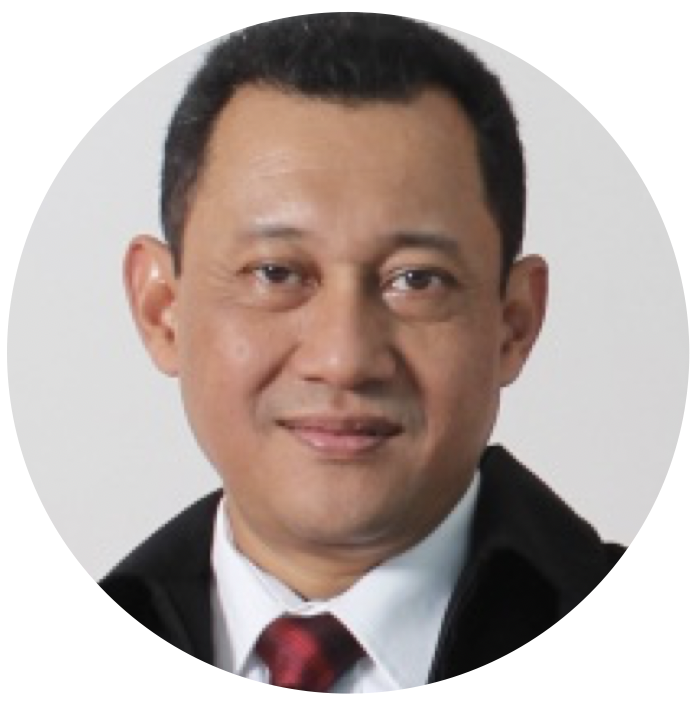
Islamic finance expert and former FaithInvest Trustee Hayu Prabowo outlines his groundbreaking new paper which describes how Tayyib economics could transform Islamic finance into a global leader in the transition to a just and sustainable economy.
In an era defined by the escalating climate crisis, a often overlooked Islamic principle offers a powerful and spiritually-grounded roadmap for change. My new paper, Beyond Halal: The Imperative of Ṭayyib Economics for a Sustainable Future, posits a transformative idea: that the vast, ethical reservoir of Islamic finance must be systematically directed toward healing our planet and empowering its people.

The key to this evolution lies in embracing the profound, yet often overlooked, Quranic principle of tayyib – a concept that moves the industry beyond mere legal compliance toward a holistic vision of purity, wholesomeness, and comprehensive benefit.
For decades, Islamic finance has been rightly guided by the clear boundaries of the halal (permissible) and haram (prohibited). This framework successfully filters out egregious harms such as interest (riba) and excessive uncertainty (gharar).
However, my study argues that this binary is a necessary but insufficient foundation for the challenges of the 21st century. An economic activity can be technically permissible yet still be wasteful, ecologically destructive, or socially divisive.
'The concept of Ṭayyib introduces a higher, more affirmative standard. It demands that our economic actions are not just lawful but are actively and verifiably good' – Hayu Prabowo
The concept of Ṭayyib introduces a higher, more affirmative standard. It demands that our economic actions are not just lawful but are actively and verifiably good. This paradigm shift seamlessly bridges the United Nations' Sustainable Development Goals (SDGs) with the core objectives of Islamic law (Maqasid al-Shariah).
My research demonstrates that tayyib operationalises the classical goals of preserving religion, life, intellect, progeny, and wealth by making environmental stewardship (hifz al-bi'ah) and social equity non-negotiable pillars of economic life.
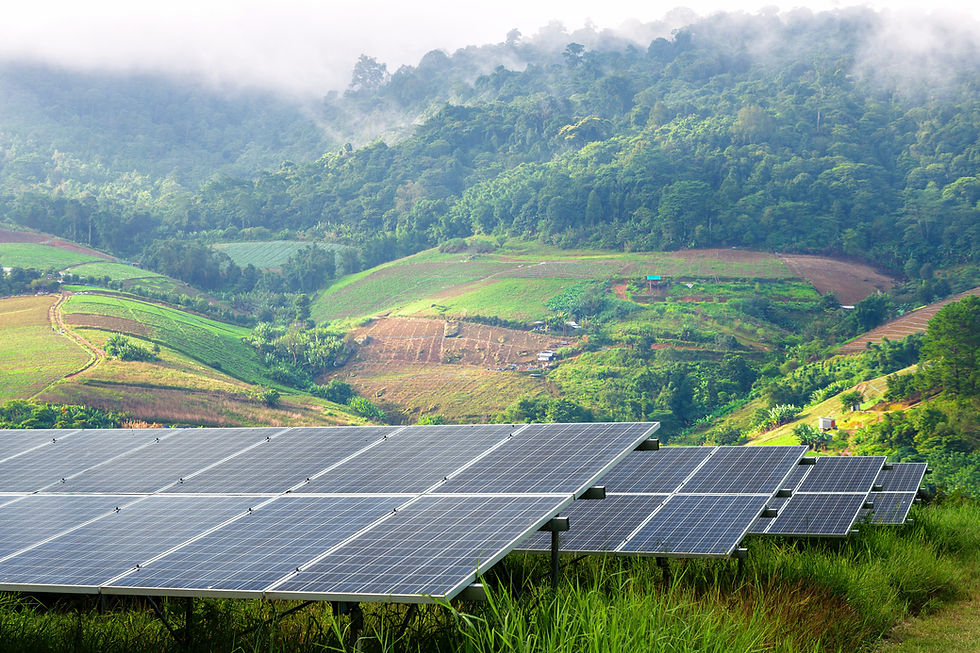
In this light, financing a renewable energy project or a reforestation initiative is not just a 'green investment' – it is a modern fulfilment of the Quranic injunction to be stewards (khalifah) on Earth and a direct action to preserve life and wealth for future generations.
Three pillars of a Ṭayyib Economy
My study crystallises this expansive concept into three interconnected dimensions that define a tayyib economy:
The ethical dimension: Moving beyond the avoidance of exploitation to actively promote justice ('adl), compassion (rahma), and fair trade in all transactions. It calls for an economy where the rights of workers, consumers, and communities are upheld with integrity.
The environmental dimension: This pillar operationalises the role of khalifah by mandating resource conservation and pollution prevention. It rigorously applies the Quranic condemnation of waste (israf) to champion circular economy principles and aligns modern tools such as environmental impact assessments with the Islamic tradition of hisbah – the civic duty to enjoin good and forbid wrong.
The social dimension: Ṭayyib economics prioritises inclusive development and the broad circulation of wealth, directly opposing its concentration. It empowers and revitalises traditional Islamic tools such as zakat (obligatory almsgiving) and waqf (perpetual endowment) as powerful engines for poverty alleviation and community resilience.
Waqf and CWLS as engines of change
The paper illustrates this theory in action by highlighting the potential of two key instruments: the ancient institution of waqf and the modern innovation of Cash Waqf Linked Sukuk (CWLS).
What is Waqf? Waqf is a unique and powerful form of perpetual charity. It involves the irrevocable dedication of a tangible asset – such as land, a building, or financial capital – for a specified charitable purpose defined by the donor (wakif). Once endowed, the asset becomes inalienable; it cannot be sold, inherited, or gifted, locking its benefits for public good in perpetuity.

My study explores the emergence in recent years of the Green Waqf Framework which leverages this timeless model for contemporary environmental challenges. In practice, this manifests as a waqf forest (hutan wakaf), for example, where a parcel of land is legally designated as waqf solely for conservation, reforestation, and sustainable agroforestry.
This ensures the land is permanently protected from conversion for commercial plantations or mining. The benefits are multifaceted: the forest serves as a carbon sink, protects biodiversity, and can be managed by local communities to provide halal, sustainable livelihoods through ecotourism or the harvesting of non-timber forest products.
What is CWLS? While the concept of waqf is centuries old, its application is being supercharged by modern financial engineering, most notably through Cash Waqf Linked Sukuk (CWLS). This innovative instrument brilliantly merges social philanthropy with commercial capital markets.
Here’s how it works: Financial authorities issue a retail-friendly sukuk (an Islamic bond), which the public can purchase. However, unlike a conventional sukuk where investors receive all the profit, in a CWLS, the returns generated from the underlying investments are directed not to the investor, but to fund waqf projects selected by participating nazirs (waqf managers).
The investor’s principal is returned at maturity, but their profit is treated as a charitable donation, creating a massive, scalable pool of sustainable funding for social and environmental causes.
The study points to Indonesia's success with CWLS as a proof-of-concept. Having issued over Rp 17.1 trillion (approximately USD 1.05 billion) through CWLS, the country has created a robust pipeline of capital for impactful projects. This model democratises philanthropy, allowing individuals to contribute to large-scale, lasting change with smaller amounts of capital, and provides nazirs with a dependable, long-term funding stream.
Charting a path forward
Despite its immense promise, the research does not shy away from the significant barriers to scaling Ṭayyib Economics. A major hurdle is standardisation. Divergent legal opinions (fatwas) from national Sharia boards in different countries create market fragmentation. For instance, a green energy project might be financed using an istisna' contract in Malaysia but require an ijarah structure in Indonesia, increasing complexity and cost for cross-border investments.
Furthermore, a critical literacy gap persists. A survey cited in the study revealed that 68% of Indonesian Muslims conflate halal with ṭayyib, unaware that the latter encompasses broader environmental and social responsibilities. This lack of consumer awareness is matched by an institutional capacity gap, with only 12% of Islamic banks offering dedicated ṭayyib training to their staff.
To overcome these challenges, I propose a concerted, multi-stakeholder action plan. Key recommendations include:
Developing a unified global tayyib taxonomy through bodies such as the Islamic Financial Services Board (IFSB) to harmonise standards
Launching national literacy campaigns, partnering with mosques and schools, to reframe sustainability as a religious duty rooted in Quranic principles such as the prohibition of waste
Implementing supportive policies, such as tax incentives for Green Sukuk and CWLS issuers, and mandating the integration of tayyib criteria into Sharia audits.
A new paradigm for global sustainability
In conclusion, my Beyond Halal paper presents a compelling vision where Islamic finance transcends its niche to become a global leader in the transition to a just and sustainable economy.
My research offers a powerful, hopeful narrative for our time: that healing our wounded planet is not merely a technical or economic challenge, but a sacred obligation, and that the tools to fulfil this duty are embedded within the faith itself' – Hayu Prabowo
By harnessing the ethical imperative of tayyib and the powerful, scalable mechanisms of Green Waqf and CWLS, Muslim-majority nations like Indonesia can pioneer a development model that is not only financially viable but also culturally resonant and spiritually fulfilling. My research offers a powerful, hopeful narrative for our time: that healing our wounded planet is not merely a technical or economic challenge, but a sacred obligation, and that the tools to fulfil this duty are embedded within the faith itself.
Hayu Prabowo is a corporate finance expert with more than 20 years in financial modelling on company valuations for mergers and acquisitions. He is a lecturer in Islamic Economics and Finance at Indonesia's National Islamic University, and has a social interest in sustainable financing. He chairs the Environmental and Natural Resources Board of the Council of Islamic Scholars of Indonesia (MUI), the nation's top Muslim clerical body.


